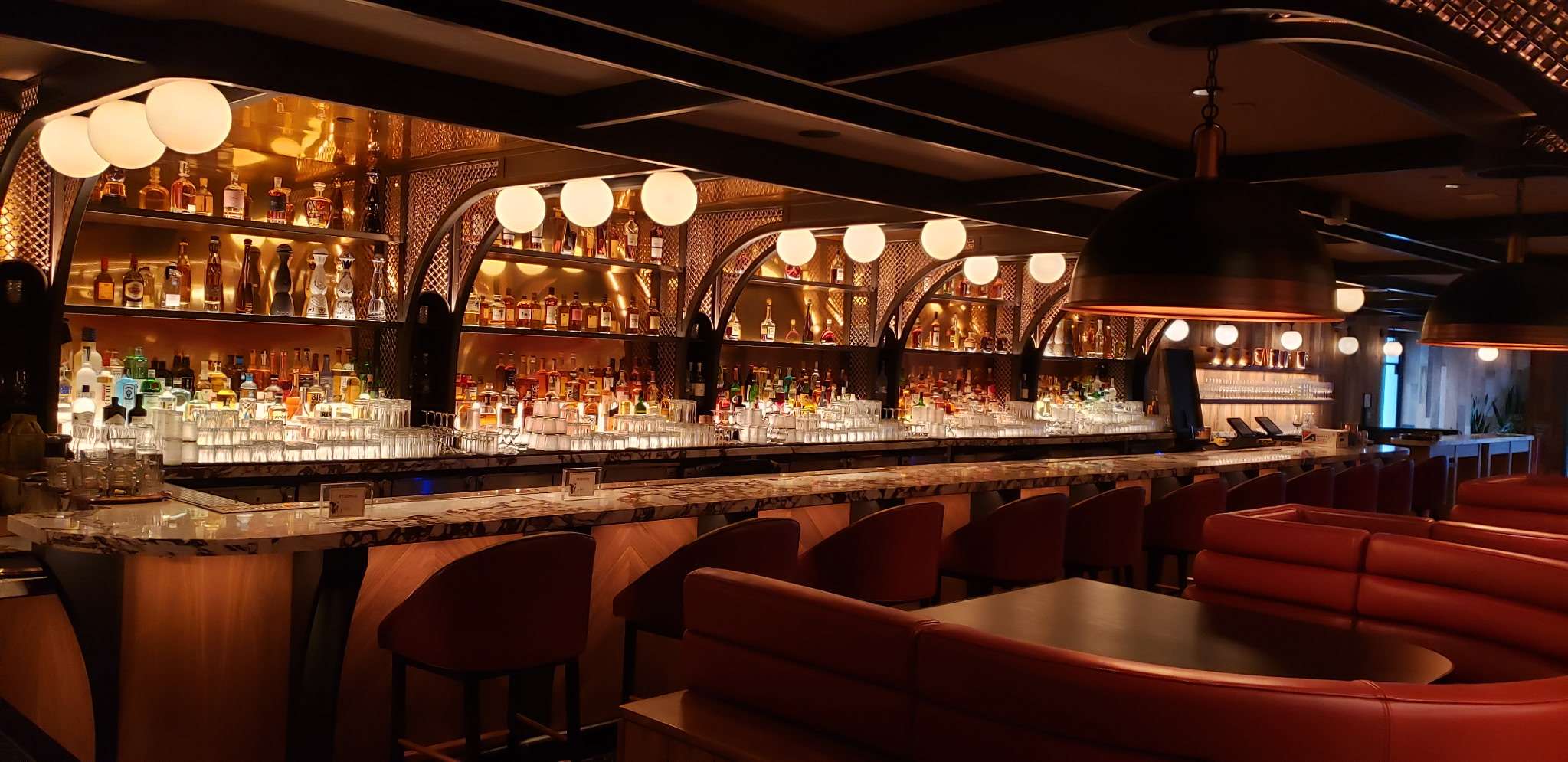
A hotel bar or restaurant dining room puts millwork through abuse a home never will. Here's what separates casework that survives opening week from casework that doesn't.
Hospitality millwork looks like furniture and lives like industrial equipment. A restaurant host stand or a hotel back-bar gets touched thousands of times a week, cleaned with chemicals every night, and rarely gets a day off. Building for that is a different job than building a beautiful kitchen, and most of the work happens before the first cut.
It has to survive the cleaning crew, not just the guests
Guests are gentle compared to closing staff. The same surfaces get wiped down nightly with degreasers and sanitizers, and water pools wherever it can — at the base of a bar, around a sink, along a counter seam. That reality drives the finish spec and the construction details: chemical-cure coatings, sealed edges, and toe-kicks and substrates that won't swell the first time a mop goes by.
Codes and ratings come first
Commercial work answers to the building code in ways residential doesn't. Wall paneling may need a Class A flame-spread rating. Assemblies near certain areas may need to be fire-rated. Counters and reception surfaces have ADA height and reach requirements. None of this is optional, and all of it is cheaper to design in than to discover during inspection.
You're one trade in a crowded schedule
On a build-out, millwork shares the room with electrical, plumbing, stone, and a general contractor running a tight calendar. That means coordinating cutouts and blocking with other trades, field-verifying dimensions against what was drawn months earlier, and often installing in off-hours so the space can open on time. The shop that plans for the schedule, not just the drawing, is the one that doesn't hold up the job.
Lead time is the whole game
Specialty veneers, stone, and decorative hardware can carry weeks of lead time. Get those identified and ordered early, get shop drawings approved early, and build a mockup for anything that repeats across the space — a guest-room vanity, a row of identical booths — so a detail gets fixed once instead of forty times.
- Specify finishes for the nightly cleaning routine, not the showroom.
- Confirm fire ratings and ADA requirements before you mill.
- Field-verify every opening against the latest set.
- Mock up anything that repeats, and approve it once.
This is exactly why we keep design, fabrication, finishing, and installation under one roof. When the same shop owns the whole chain, the details that make hospitality work survive the trip from drawing to opening night.
Got a project in mind?
We design, build, finish, and install custom cabinetry and millwork. Tell us what you're working on.
Get a Quote